))

DCAA INSIGHTS · REGIONAL DATA CENTRE WATCH
Japan is exploring a more integrated approach to AI infrastructure — bringing electricity, site development, cooling and computing together from the beginning. A proposed project in Chiba provides a useful example of how closer coordination could shorten development timelines, while Japan's wider Watt-Bit policy shows that the same issue is being considered at government level.
Overview
Japan is testing a different approach to accelerating large-scale AI infrastructure: instead of treating the data centre, its electricity supply and computing platform as separate development problems, plan them together.
On 1 October 2026, JERA, Dell Technologies and RHAELM signed a memorandum of understanding to develop a standardised, repeatable and scalable framework for AI infrastructure in Japan.
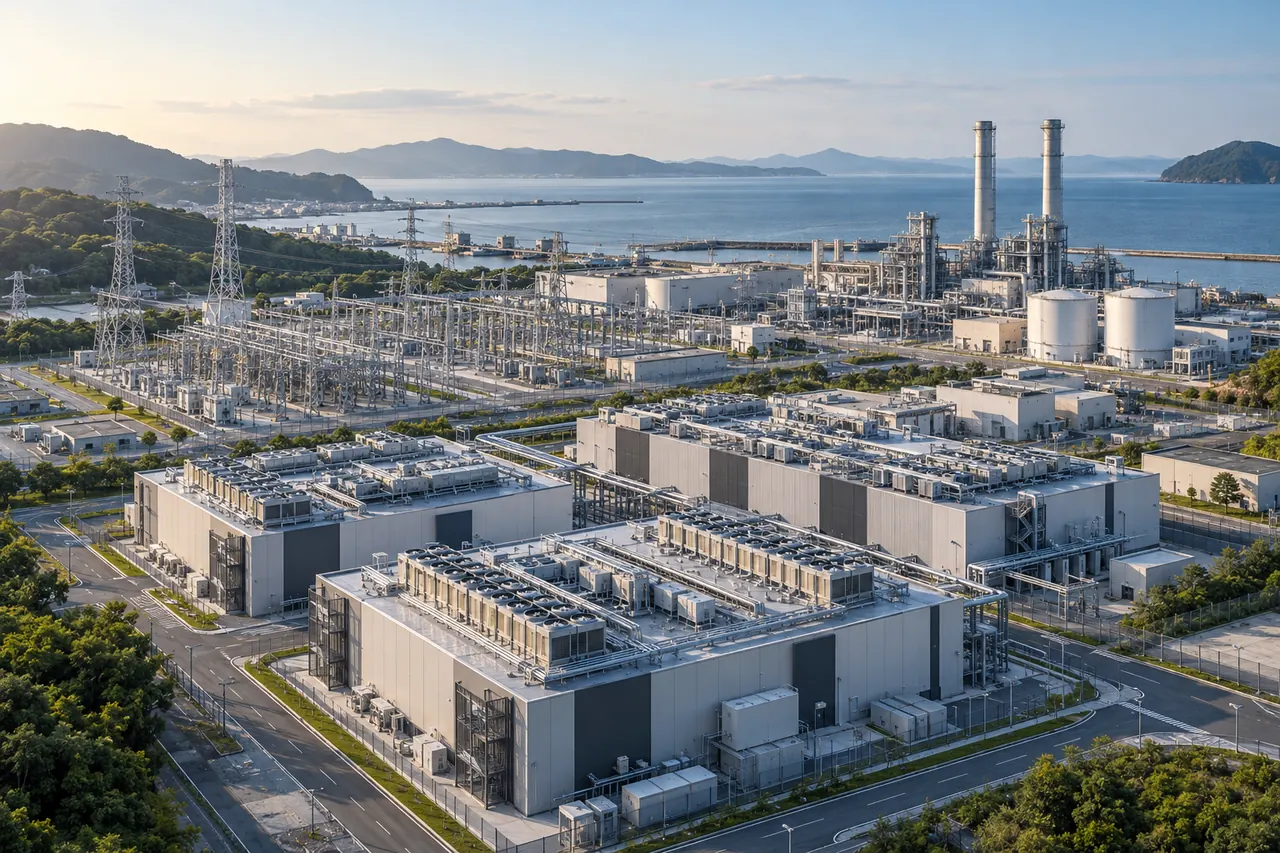
The first planned application is at JERA's Chiba Thermal Power Station, where JERA and RHAELM are developing an AI infrastructure project supported by up to 400 MW of power capacity.
JERA says total capital deployment across the proposed Chiba project is expected to exceed US$15 billion, covering land, power infrastructure, facility construction and AI computing equipment. Operations are targeted to begin around 2028.
These figures require careful interpretation.
The 400 MW figure describes supporting power capacity, not a disclosed 400 MW critical IT load. The US$15 billion-plus figure represents expected capital deployment across several components and phases of development.
And most importantly, the collaboration remains an MoU and proposed development framework. It should not be treated as completed construction or operational capacity.
Why it matters
The interesting part of the Chiba project is not simply its proposed size.
It is the way the partners are trying to address one of the major constraints affecting AI infrastructure: the difficulty of aligning land, electricity, electrical infrastructure, cooling and high-density computing quickly enough.
JERA would contribute the site and large-scale power infrastructure. Dell Technologies would provide a standardised rack-scale AI computing platform through the Dell AI Factory, while RHAELM would lead development and integration of the data-centre infrastructure.
Rather than designing every component independently for each new facility, the partners intend to develop a model that can be refined at Chiba and potentially repeated at other JERA locations.
Another important feature is the proposed behind-the-meter power arrangement.
The AI infrastructure would be located alongside an existing JERA generation asset and supplied directly from that power infrastructure. JERA says this could allow capacity to be delivered years earlier than under a conventional development dependent on a new grid connection.
Behind-the-meter — in simple terms
A behind-the-meter arrangement means the data centre can receive electricity directly from nearby generation infrastructure rather than relying entirely on a conventional grid connection.
That does not mean the project avoids all electrical, regulatory or engineering constraints.
But it illustrates a broader change in data-centre planning:
For very large AI facilities, access to power is increasingly becoming part of the development model itself — not simply a utility connection arranged after the site has been selected.
Japan is also coordinating power and digital infrastructure at policy level
The Chiba project sits within a wider Japanese effort to coordinate electricity and digital infrastructure.
Japan's Ministry of Economy, Trade and Industry and Ministry of Internal Affairs and Communications launched the Public-Private Advisory Council on Watt-Bit Collaboration in March 2025.
Watt-Bit Collaboration — in simple terms
Japan's Watt-Bit Collaboration is an effort to plan electricity infrastructure and digital infrastructure together, so new data centres can be developed where sufficient power and connectivity can realistically be provided.
The concept recognises that rapid growth in AI and communications traffic is increasing data-centre demand, while electricity infrastructure and telecommunications infrastructure do not always develop in the same places or within the same timeframes.
The objective is therefore to coordinate the development of power, telecommunications and data-centre infrastructure more effectively.
METI has since continued to promote the approach. In 2026 it described Watt-Bit Collaboration as a way of encouraging data-centre development in locations suited to available power resources while developing telecommunications infrastructure alongside them.
This is significant because accelerating AI infrastructure is not simply a question of constructing buildings faster.
A facility can only become operational when multiple dependencies converge:
Site + Power + Grid or On-site Supply + Connectivity + Cooling + Computing + Commissioning + Operations
If one of these develops substantially more slowly than the others, the entire project can be delayed.
Philippine relevance
Japan's approach cannot simply be copied into the Philippines.
The two countries have different electricity markets, regulatory systems, construction environments and levels of infrastructure maturity.
But several principles are relevant.
The first is early coordination between power and data-centre development.
The Philippines is already beginning to see similar thinking. The MGEN–VITRO collaboration, for example, is examining potential sites, generation capacity, renewable resources, connectivity and data-centre requirements together rather than treating electricity as an afterthought.
The second is standardisation.
Repeatable designs and pre-integrated systems could potentially reduce engineering repetition and shorten parts of the development process, provided Philippine climate, seismic, electrical, safety and regulatory requirements are incorporated properly.
The third is site readiness.
Having land available is not enough. A viable AI data-centre location also needs sufficient electricity, diverse connectivity, cooling capability, logistics and an achievable approval pathway.
And the fourth is coordination.
The Japanese Watt-Bit approach recognises that power infrastructure and telecommunications infrastructure need to develop together.
That is particularly relevant as the Philippines considers where its next generation of data-centre clusters could emerge.
DCAA perspective
Japan's current approach highlights an important distinction in the global AI infrastructure race:
Building faster does not simply mean constructing the building faster.
Development timelines depend on how effectively power, connectivity, design, cooling, computing infrastructure, regulatory approvals and commissioning can be brought together.
Standardised systems may shorten some stages.
Closer coordination between energy and digital infrastructure may address others.
But once the facility becomes operational, engineering quality, maintenance, resilience and competent operations remain essential.
For the Philippines, the useful lesson is therefore not to reproduce Japan's model exactly.
It is to examine where earlier infrastructure coordination, greater standardisation and clearer development pathways could make future Philippine data-centre projects easier to deliver without compromising safety or resilience.
BUILD THE INFRASTRUCTURE. BUILD THE WORKFORCE.
Selected sources
- JERA — JERA, Dell Technologies and RHAELM Sign MoU to Accelerate National-Scale AI Infrastructure Development in Japan, 1 October 2026
JERA — Official announcement - RHAELM — JERA, Dell Technologies and RHAELM Sign MoU to Accelerate National-Scale AI Infrastructure Development in Japan, 1 October 2026
RHAELM — Official announcement - METI — Public-Private Advisory Council on Watt-Bit Collaboration, 18 March 2025
METI — Watt-Bit Collaboration council launch - METI — Report 1.0 of the Public-Private Advisory Council on Watt-Bit Collaboration, 12 June 2025
METI — Watt-Bit Collaboration Report 1.0 - METI — Japan's 2026 explanation of Watt-Bit Collaboration and AI-related data-centre power demand
METI — Watt-Bit Collaboration and data-centre infrastructure
Editorial Notice
DCAA Insights is provided for general industry information and professional education. Sourced information and third-party statements are attributed to their original publishers. DCAA commentary and analysis are identified as such. References to companies, projects or external resources do not constitute endorsement. External publications remain the intellectual property of their respective owners. Readers should refer to the original sources for the latest information.