))

DCAA INSIGHTS · INDUSTRY UPDATES & COMMENTARY
Overview
Meralco PowerGen Corporation (MGEN) and VITRO REIT, Inc. have signed a memorandum of understanding to explore a sustainable, power-enabled digital infrastructure proposition in the Philippines.
The collaboration will assess potential development sites, generation capacity, renewable-energy resources, connectivity requirements, data-centre specifications and commercial structures. MGEN will examine potential locations and power-supply arrangements, while VITRO will lead data-centre design and site studies, connectivity planning and engagement with prospective hyperscalers and other locators.
At this stage, it remains an MOU and feasibility collaboration. No specific new data-centre site, IT capacity, investment value or construction programme has yet been committed.
The significance is therefore less about a new project announcement and more about the question it raises:
As hyperscale and AI infrastructure becomes increasingly power-intensive, should energy and digital infrastructure increasingly be planned together from the outset?
Why it matters
For large data centres, power is increasingly part of site strategy rather than something secured after a location has been chosen.
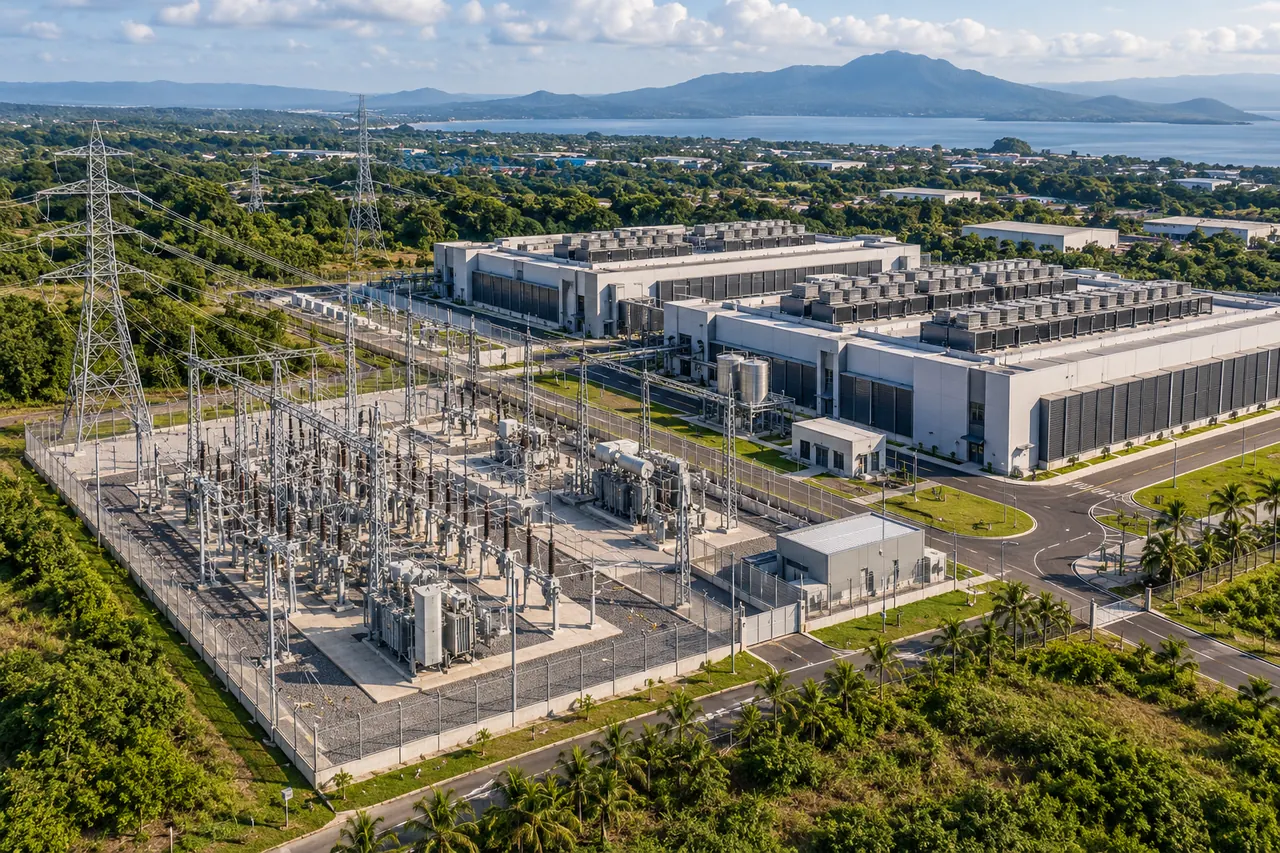
VITRO Sta. Rosa illustrates the scale involved. The facility is designed for 36 MW of IT load, supported by a dedicated 60 MW substation, dual utility feeds and a 2N redundant power configuration.
But MGEN is only one participant in a much broader Philippine energy ecosystem. Other major players include AboitizPower, ACEN, First Gen and San Miguel Global Power, alongside other generators, renewable-energy developers, retail electricity suppliers and utilities.
Aboitiz is particularly relevant because its wider group already spans power, economic estates and digital infrastructure, including Aboitiz InfraCapital's partnership with EdgeConneX for data-centre development.
The wider issue is therefore not which individual power provider will support future data centres. It is whether the Philippine market can bring together:
Power → Site → Connectivity → Cooling → Facility Design → Operations → Skilled Workforce → Assurance
early enough to support increasingly demanding facilities.
The Board of Investments has similarly highlighted power availability, grid reliability, renewable-energy access, permitting efficiency and workforce readiness as factors influencing data-centre investment decisions.
DCAA perspective
The MGEN–VITRO agreement is worth watching because it brings power generation and digital infrastructure into the same development conversation.
But the opportunity extends beyond these two companies.
As Philippine data-centre development expands, different locations may depend on different generators, renewable-energy developers, utilities and commercial supply arrangements. What matters is whether reliable and commercially viable power can be aligned with suitable land, connectivity, cooling and data-centre engineering from the beginning.
Physical infrastructure is also only part of the equation.
As facilities become larger and more technically sophisticated, the professionals responsible for commissioning, operating, maintaining and assessing them must understand how these interconnected systems behave.
The next stage of Philippine data-centre development will therefore depend not only on how much infrastructure can be built, but on whether physical capacity and professional capability can develop together.
BUILD THE INFRASTRUCTURE. BUILD THE WORKFORCE.
Sources
- MGEN — MGEN, VITRO Join Forces to Explore Sustainable, Power-Enabled Digital Infrastructure (October 2026).
- VITRO — VITRO Sta. Rosa (October 2026).
- Board of Investments — Data Center and Power Southeast Asia Summit 2026 (October 2026).
- Aboitiz Group — Our Businesses (October 2026).
This is an external original source. DCAA's commentary is a summary and perspective, not a republication or endorsement.
Read the Original Article →Editorial Notice
DCAA Insights is provided for general industry information and professional education. Sourced information and third-party statements are attributed to their original publishers. DCAA commentary and analysis are identified as such. References to companies, projects or external resources do not constitute endorsement. External publications remain the intellectual property of their respective owners. Readers should refer to the original sources for the latest information.